
August 2026 Real Estate Update for Greater Vancouver
Click HERE for the latest newsletter OR CHECK OUT the BLOG for buyer and seller tips and insights.
August’s Vancouver real estate market continued to tell a nuanced story.
Prices are still moving down. Inventory is beginning to tighten. And buyers are becoming increasingly strategic.
At first glance, that may seem like a contradiction.
It isn’t.
It tells us something important about where the market may be heading next.
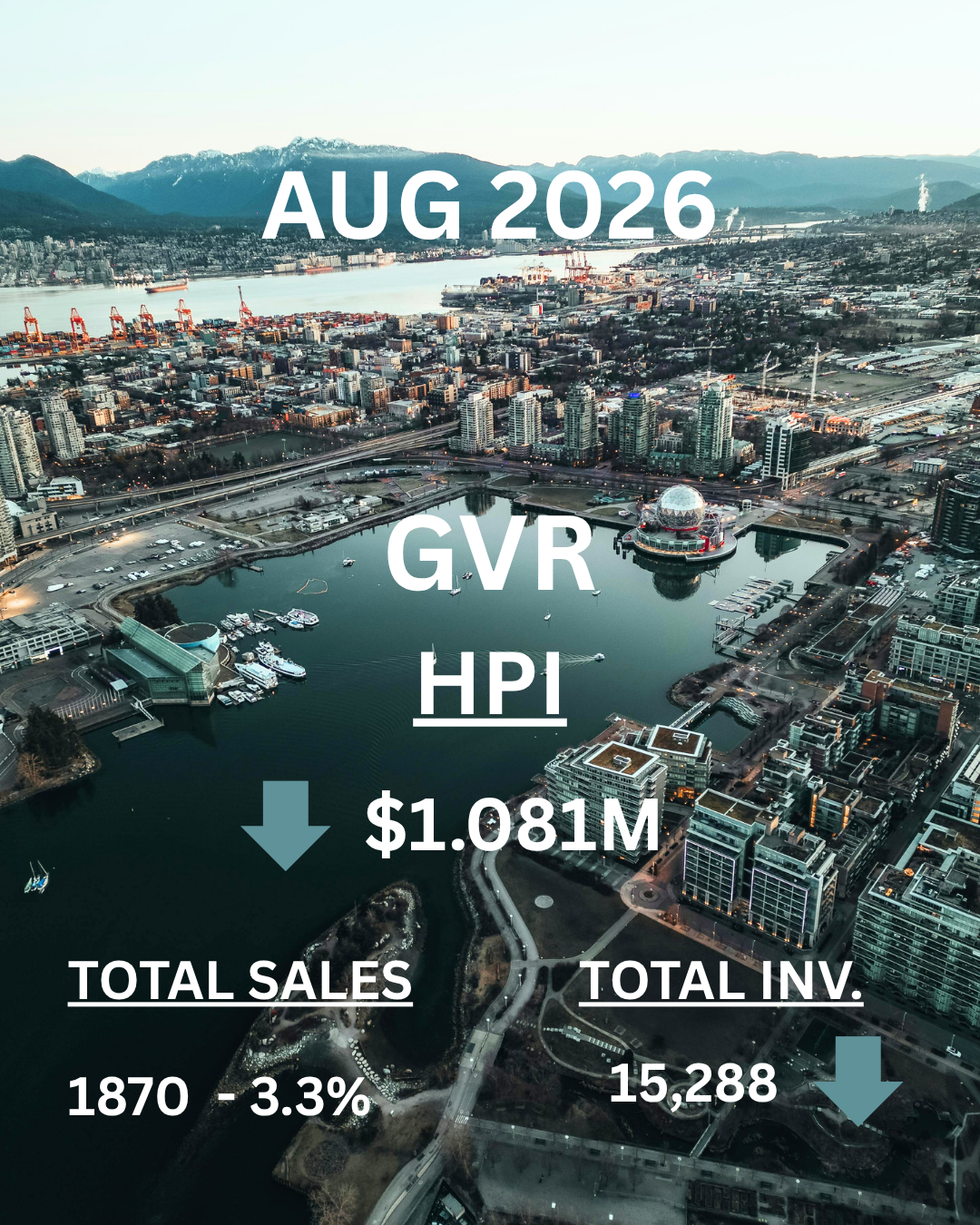
$1.081M
Metro Vancouver benchmark price
1,870
Metro Vancouver sales
15,288
Metro Vancouver total listings
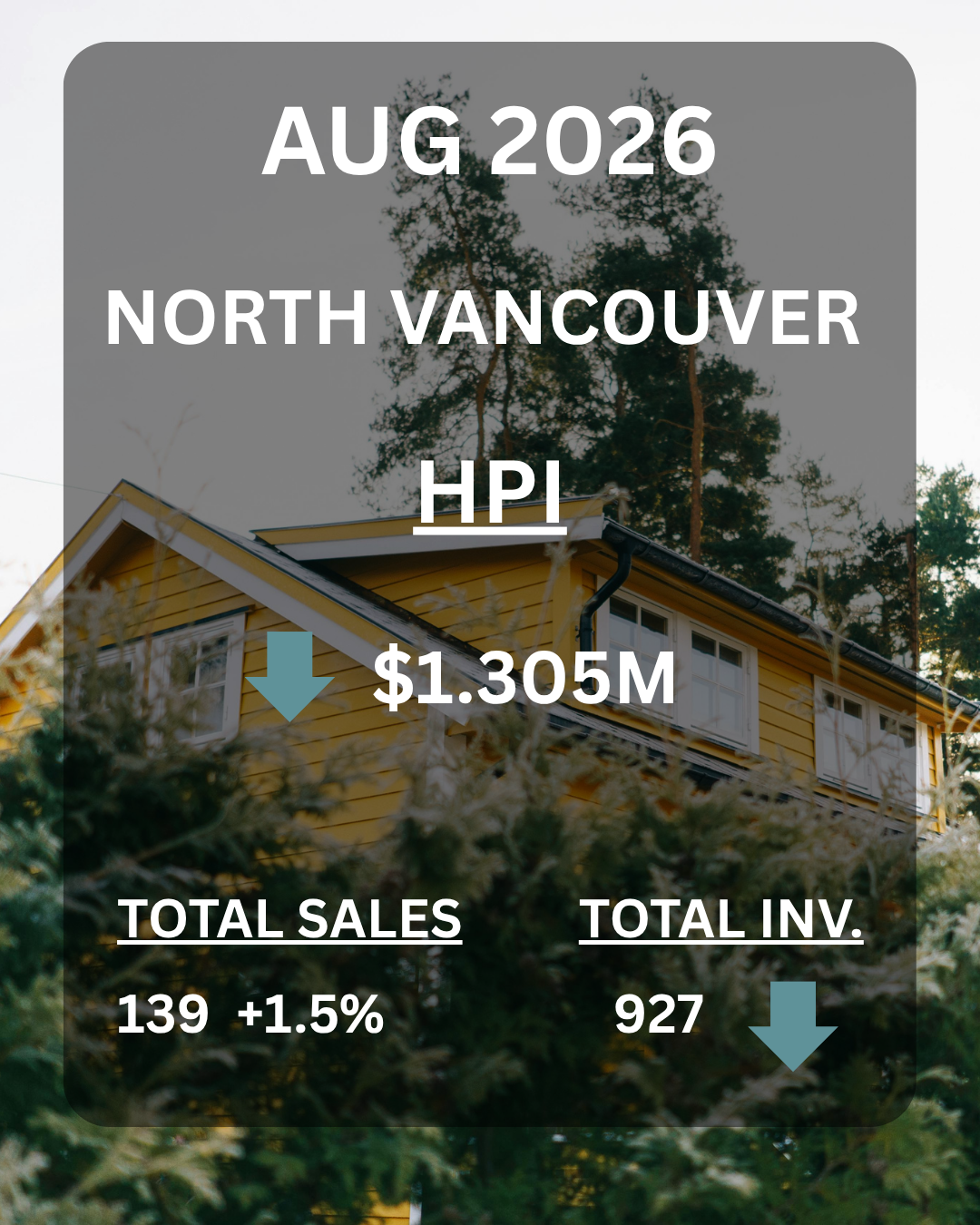
$1.305M benchmark price
139 sales
+1.5% year over year
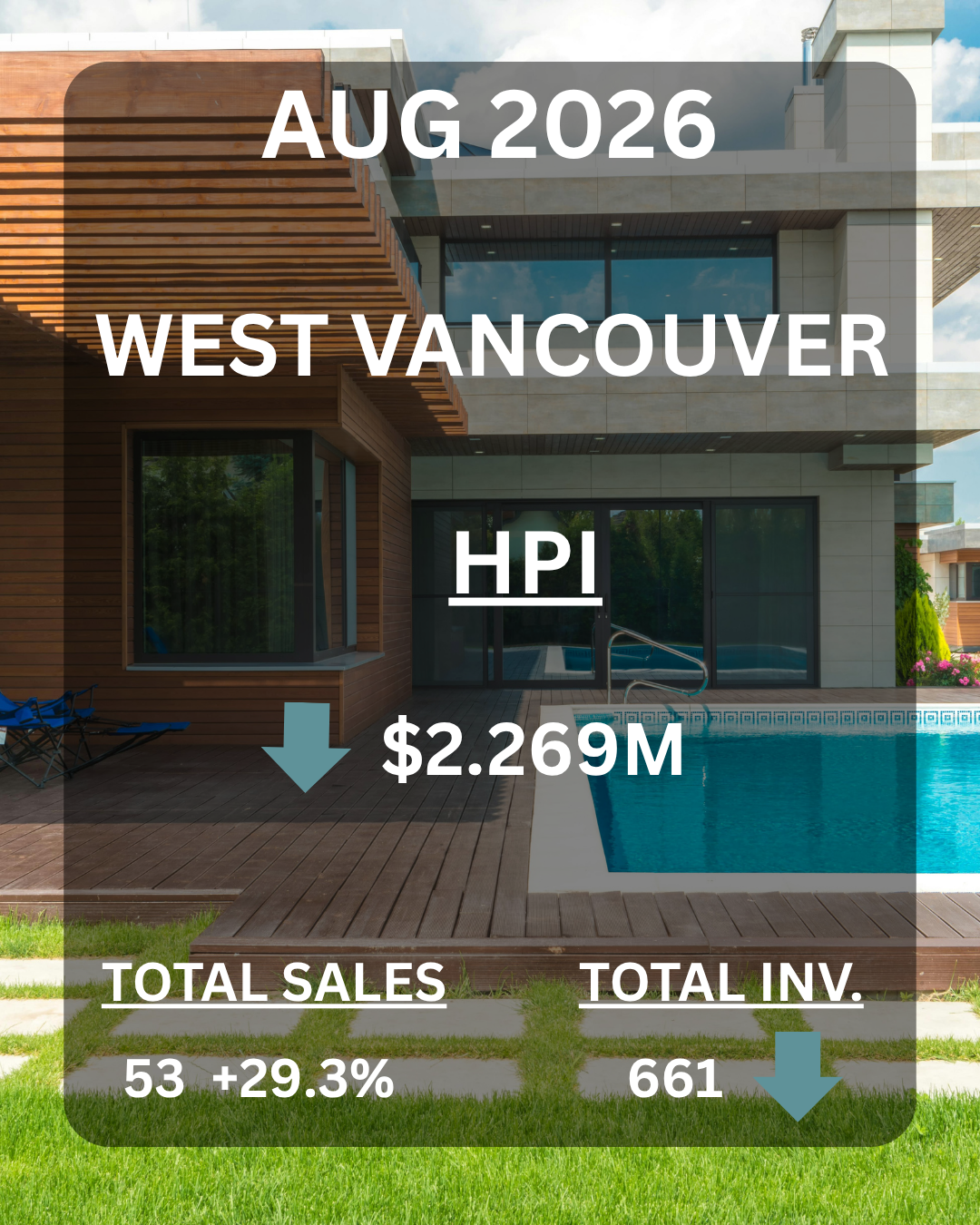
$2.269M benchmark price
53 sales
+29.3% year over year
Inventory is also tightening:
927 listings in North Vancouver
661 listings in West Vancouver
The takeaway?
There are fewer homes coming onto the market, but we haven’t yet seen enough buyer urgency to push prices higher. Though, we have seen the odd home sell above ask.
We’re seeing less inventory without an immediate lift in pricing.
Why?
Because buyers still have choices.
They’re taking their time. Comparing properties. Negotiating. Looking closely at condition, location and value.
And increasingly, they’re asking a bigger question:
That’s a very different buyer from the one we saw in highly competitive markets. And I think that’s a good thing.
A more considered buyer creates a market where decisions are increasingly based onvalue rather than fear of missing out.
September is often when buyers return to the market with purpose.
Summer distractions fade. Families settle back into routines. And people who have been watching the market begin deciding whether it’s time to make a move.
For buyers hoping to purchase before the quieter fall and winter months, September can create an interesting opportunity window.
Not because I expect a sudden surge in prices.
Rather, because buyers may have less choice than they did earlier in the year while sellers are still competing for attention.
If inventory continues to tighten and buyer confidence improves, the balance between supply and demand could begin to shift.
That’s the trend I’ll be watching closely.
This is still a market where you can take your time.
Look beyond the asking price. Consider the neighbourhood, the property, the condition, the future potential and—most importantly—whether it fits the life you’re actually trying to create.
But there’s a difference between being patient and waiting indefinitely.
Waiting for the “perfect” moment can be just as risky as rushing.
It’s about recognizing value when you find it.
That might mean a well-positioned home in the right neighbourhood, a property with potential that others have overlooked, or a seller who is genuinely motivated.
The numbers tell you where the market is moving.
Local insight helps you recognize where the opportunity may be.
August sales increased 29.3% in West Vancouver and 1.5% in North Vancouver, despite continued price pressure.
That tells us something important:
Buyers are still in the market. They’re simply being more discerning about what they buy.
For sellers, that makes positioning everything.
Strategic pricing matters.
Presentation matters.
And marketing needs to do more than simply put a property on MLS and hope the right buyer finds it.
Your home needs to give buyers a reason to choose it.
That means communicating not just the features of the property, but the lifestyle that comes with it.
Because a home isn’t simply square footage and a price tag.
It’s the morning coffee with a view.
The walk to the water.
The trail at the end of the street.
The neighbourhood you come home to.
We’re not at the point where I would call this a rising Vancouver real estate market.
But we’re also not looking at a market standing still.
Prices are adjusting. Inventory is tightening. Buyer behaviour is evolving.
And September will be an important month to watch.
The next phase of the market may be less about dramatic swings and more about gradual stabilization.
As always, the numbers tell us what happened.
The best real estate decisions aren’t made by reacting to the market. They’re made by understanding it.
